The latest
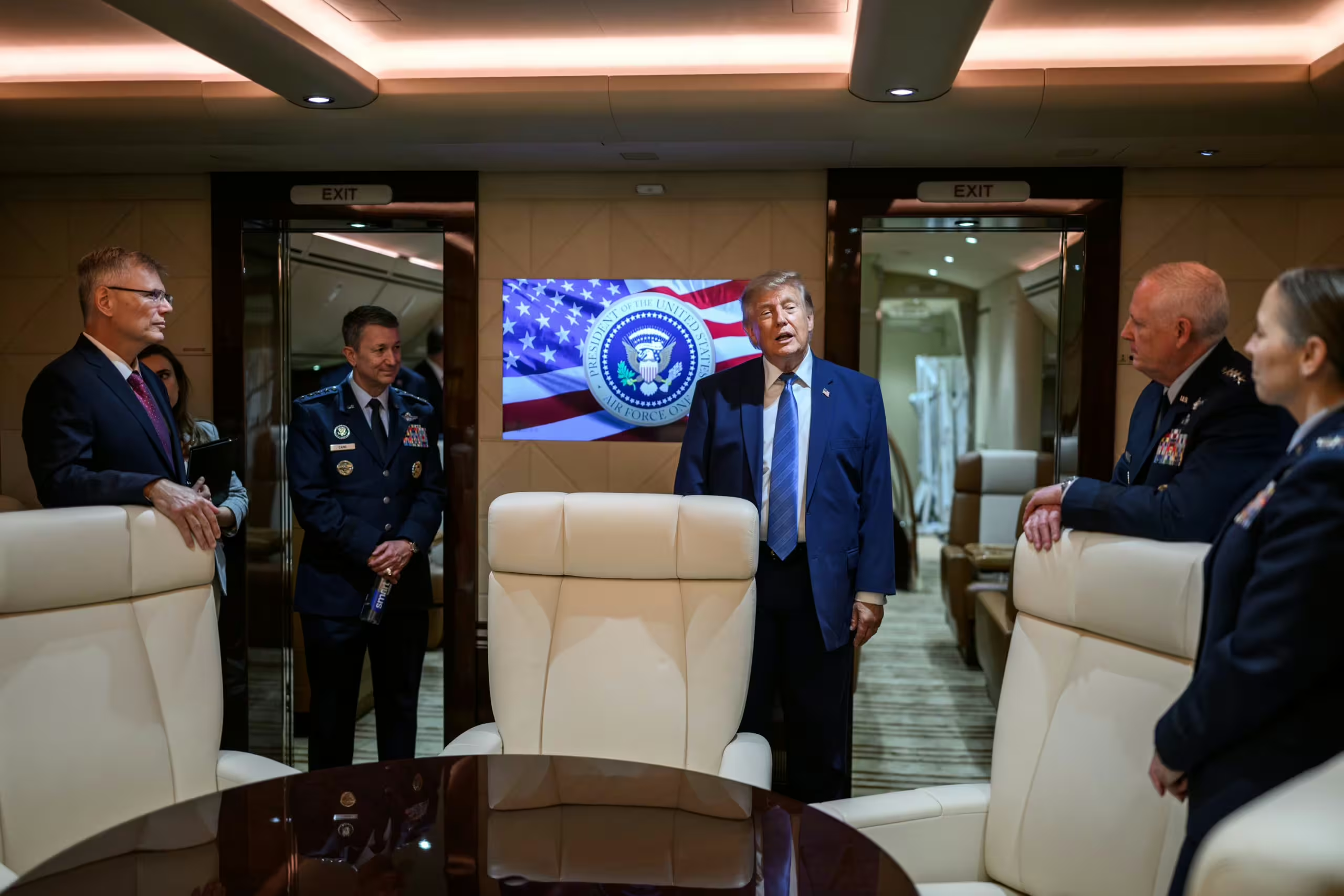
For months, President Donald Trump sought to project confidence, insisting that oil prices, stock markets and political pressures were not shaping his decisions. But remarks at the G7 summit in France revealed a different calculation.
Defending the understanding reached with Tehran, Trump said he did not want to see an “economic catastrophe” if the war continued. The comment amounted to a rare admission that economic risks weighed heavily on the White House’s thinking.
For the administration, the issue had evolved beyond Iran or regional security. The bigger threat was the possibility that an energy crisis could trigger a broader global economic shock, hitting inflation, markets and growth at a politically sensitive moment in the United States.
Details
• The conflict created one of the largest energy disruptions in modern history. Industry estimates suggest that more than one billion barrels of global oil supply were lost during the war.
• Oil prices fell sharply after the agreement and the reopening of the Strait of Hormuz. Brent crude, which surged above $120 a barrel at the height of the conflict, has since dropped below $85.
• Analysts caution that lower prices do not mean the problem has been solved. Much of the decline reflects optimism rather than the physical return of oil to the market. Restoring shipping routes, tanker operations and production capacity could take months.
• Concerns extend beyond future supply. Energy data show that both U.S. and global inventories have fallen significantly, reducing the market’s ability to absorb another major disruption.
• That helps explain why Trump’s warning about an “economic catastrophe” stood out. A president who often downplayed the importance of energy prices effectively acknowledged that a prolonged war risked triggering a wider economic crisis.
• Not everyone shares the gloomy outlook. Some analysts argue that higher OPEC production and the gradual return of Gulf exports could prevent severe shortages and keep prices under control despite lower inventories.
What to watch
The key question is no longer whether the war has ended, but whether oil supplies can return as quickly as markets expect.
If supply chains face delays or logistical problems, investors may discover that the agreement ended the fighting without fully resolving the energy crunch. If Gulf exports recover smoothly, however, the deal Trump defended as an economic necessity could become one of the main factors supporting global economic stability ahead of the U.S. midterm elections.