The latest
Vice President JD Vance is now at the center of the political fight over Trump’s deal with Iran.
In recent days, Vance has defended the memorandum of understanding with Tehran while publicly pushing back against Israeli officials who attacked the agreement.
His sharpest message was aimed at Israel’s critics of the deal. Vance said Israel should not be attacking “the only powerful ally” it has left, a clear reference to the United States.
The remarks landed as a rare public rebuke of Israel from inside a Republican administration that has otherwise presented itself as strongly pro-Israel.
Details
• Reuters reported that Vance warned Israeli critics of the agreement, saying Trump remains Israel’s most reliable global ally and noting that much of Israel’s defense infrastructure is funded by American taxpayers.
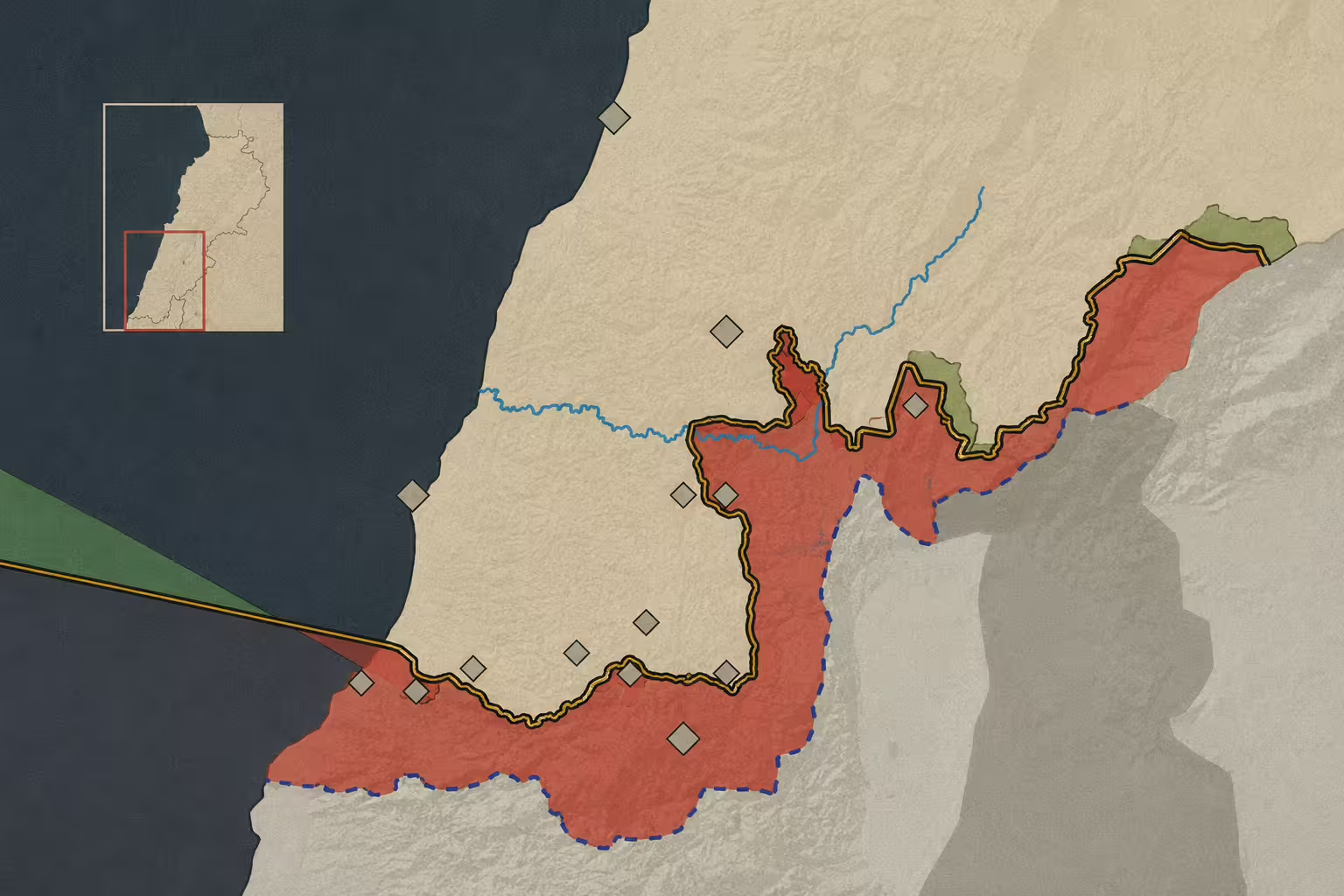
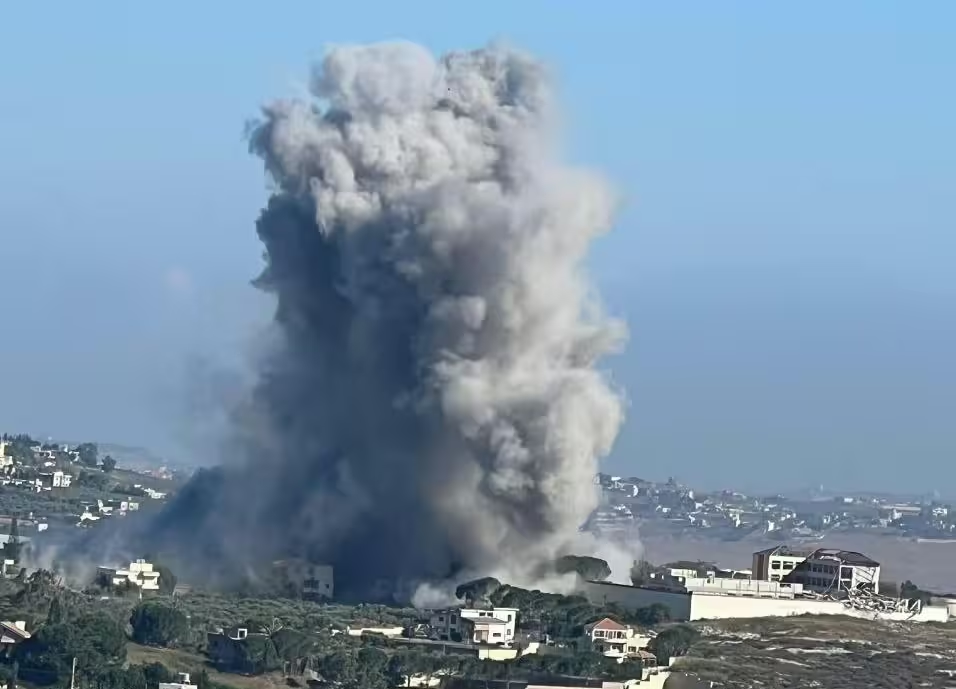
• Axios described Vance’s comments as a warning to Israel not to fight Trump over the Iran deal. The central dispute, according to the report, involves language calling for a halt to fighting with Hezbollah and an Israeli withdrawal from Lebanon as part of the final track.
• The Times of Israel said Vance pushed back against what he portrayed as Israeli panic over the agreement. It quoted him saying Israel cannot “kill its way” out of every security problem.
• Hebrew media also highlighted Vance’s line that, if he were in the Israeli government, he would not attack the only powerful ally Israel still has.
• In the United States, the New York Post said the deal has triggered a revolt inside parts of the conservative camp. Some Trump-aligned voices argue the agreement gives Iran too much and leaves Israel weaker.
• Le Monde framed Vance’s remarks as a direct attack on Israeli critics of the deal, with particular attention to his reminder of the scale of U.S. military support for Israel.
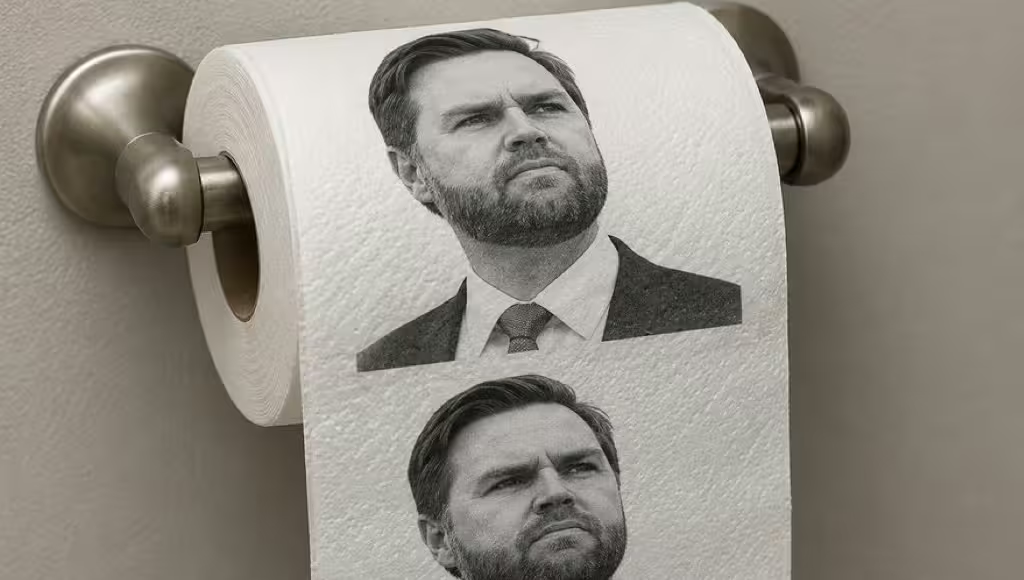
• On X, the backlash quickly became more personal. Memes portrayed Vance as soft on Iran or as restraining pro-Israel voices inside Washington. Others attacked him directly with slogans such as “Fuck Vance.”
Why it matters
Vance is not just defending the Iran deal.
He is challenging Israeli critics, reminding them that Washington is the central pillar of Israel’s security, and tying the future of the agreement to Lebanon, Hezbollah and the Strait of Hormuz.
That puts him inside a sensitive fight on the American right:
Is the priority to end the war with Iran, or to preserve Israel’s freedom of military action?
What to watch
The campaign against Vance is unlikely to stop at online mockery.
If the deal holds and tensions ease in Lebanon and Hormuz, Vance could emerge as the face of a successful Trump de-escalation.
But if the agreement collapses, or if Israel and Hezbollah keep fighting, he will be the easiest target in Washington for blame.
Vance entered this fight as the administration’s broker of calm.
His critics are trying to turn him into the symbol of concession to Iran.