The latest
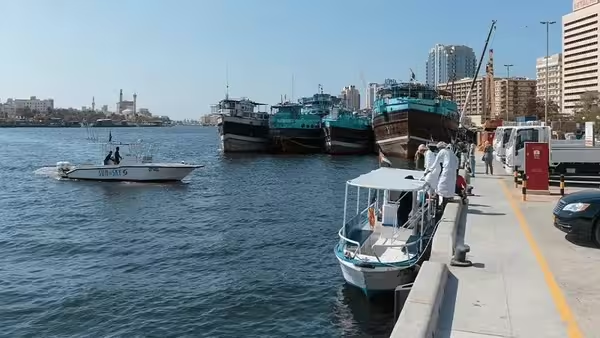
Iran’s trade with the UAE is slowly moving again through Jebel Ali, Fars reported, reopening a familiar debate in Tehran: Iran needs the UAE, but that dependence comes with serious risk.
Details
• Fars quoted Seyed Mohammad Sadegh Ghanadzadeh, a senior official at Iran’s Trade Promotion Organization, as saying commercial exchanges with the UAE have resumed through Jebel Ali at a “gentle pace.”
• The port’s activity was disrupted two days after the war, according to Fars, creating problems for unloading and shipping goods.
• Even after operations resumed, the report said the UAE did not allow the clearance of Iranian containers.
• Fars also said many Iranian traders had their bank accounts frozen and some were expelled from the UAE.
• Economist Amir Mohammad Golvani told Fars that, given the scale of trade and financial capacity involved, no country can easily take the UAE’s place in Iran’s economy.
• Golvani said the UAE’s key advantage is its flexible financial system, where traders can easily set up companies and finance exports and imports through trust-based structures.
• Former Central Bank of Iran governor Valiollah Seif said recent years have shown that relying on a single currency or trade hub is risky, even when that hub is efficient.
• Seif argued that Iran needs a wider network of trade, financial and currency channels to reduce its vulnerability to political and geopolitical shifts.
• Fars also cited the Iran Transportation Research Center as warning that making the UAE the main axis of Iran’s foreign trade again would tie the country to a geopolitical bottleneck and weaken efforts to diversify markets and logistics routes.
What to watch
The issue is bigger than Jebel Ali. Iran is trying to restore a trade route it cannot easily replace, while also admitting that the same route can become a pressure point when politics turns rough.