The latest
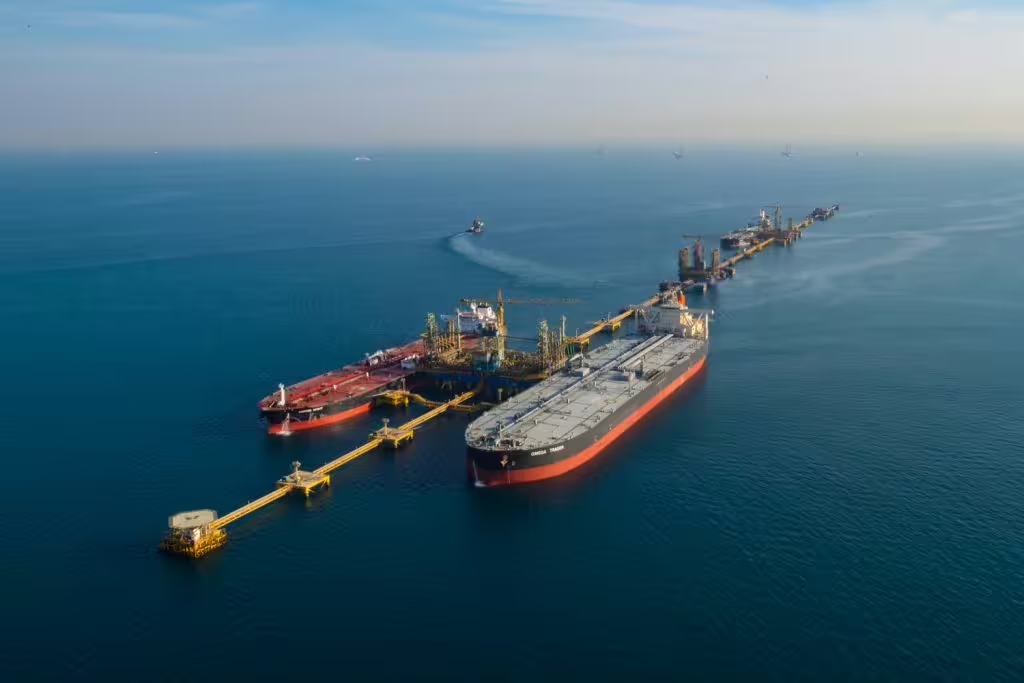
Saudi Arabia is leading the first phase of the Strait of Hormuz recovery, with several giant crude carriers heading toward Asian markets after weeks of disruption.
The departures are being closely watched across global energy markets, where traders are looking for evidence that Gulf exports are returning to normal after tensions left dozens of tankers stranded inside the Gulf.
Details
• Vessel-tracking data showed several Saudi-linked very large crude carriers (VLCCs), including ships operated by Bahri, resuming voyages through Hormuz after reactivating their tracking systems.
• Bloomberg reported that dozens of crude carriers loaded with oil remain inside the Gulf and are preparing to depart, representing tens of millions of barrels that could reach Asian markets in the coming weeks.
• Saudi Arabia is viewed as the key test case for the reopening process, given its role as the region’s largest oil exporter and a major supplier to Asia.
• In Kuwait, Kuwait Petroleum Corporation CEO Sheikh Nawaf Al-Sabah said output is expected to exceed 2 million barrels per day within a week, with production gradually returning toward pre-crisis levels as shipping conditions improve.
• Kuwait was producing around 2.5 million barrels per day before the disruption, making its recovery another important signal for Gulf energy markets.
• The United Arab Emirates continues to benefit from export routes that bypass the Strait of Hormuz, helping cushion the impact of the disruption compared with some neighboring producers.
• Iranian media have also reported a gradual return of commercial activity at southern ports, including the arrival of cargo vessels and the departure of oil tankers.
Why it matters
This is about more than Saudi Arabia or Kuwait. Gulf producers account for a significant share of globally traded oil, and a sustained reopening of Hormuz could bring a large volume of crude back to international markets within a relatively short period.
That is why institutions including Goldman Sachs and Bank of America have begun forecasting a gradual recovery in Gulf exports and a reduced risk of supply shortages. Those expectations are already influencing oil prices and market sentiment.
What to watch
The key question is no longer whether tankers will move through Hormuz, but how quickly Saudi Arabia and other Gulf producers can restore exports to pre-crisis levels. If vessel traffic continues to rise in the coming days, fears of a supply shock could quickly give way to concerns about a fresh wave of oil entering the market.