The latest
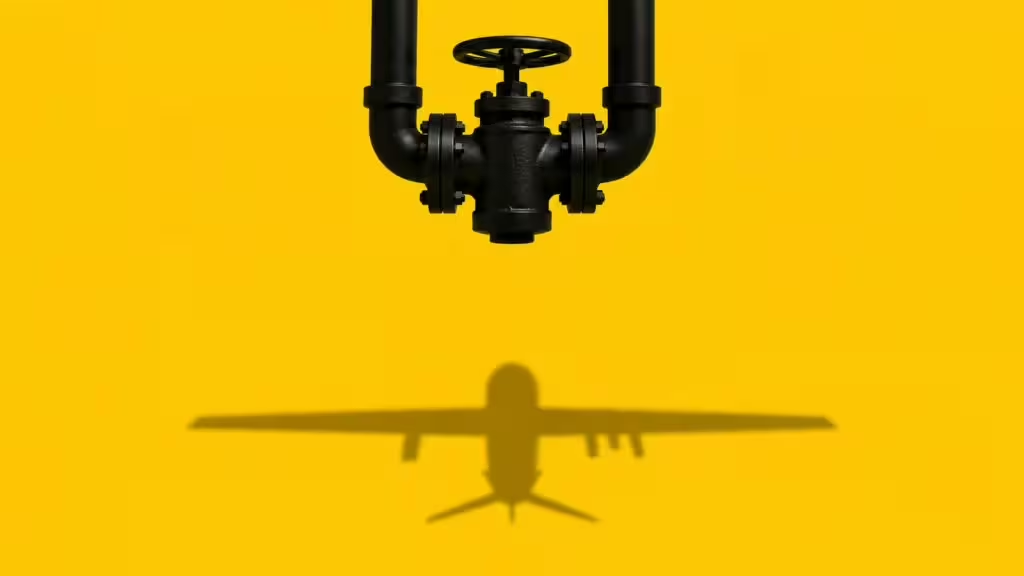
The Strait of Hormuz is no longer just an unresolved issue inside a temporary U.S.-Iran deal.
According to CNN, recent U.S. intelligence assessments concluded that Iran proved during the war it can disrupt access to the strait whenever it chooses, giving Tehran direct leverage over global energy markets and the wider economy.
CNN cited three sources familiar with the assessments who said Iran’s ability to close the strait will not disappear once the framework agreement is signed. The deal, expected Friday, is meant to reopen the waterway and set the stage for later nuclear talks.
One source told CNN that the United States had effectively handed Iran control of the strait. The source described that leverage as “more powerful than any nuclear weapon” because of its potential impact on the global economy.
Details
* U.S. assessments suggest Iran emerged from the war more convinced it can use Hormuz as a tool of political and economic pressure.
* According to CNN, Washington believes Tehran showed it can disrupt the strait without exhausting major parts of its military capability.
* One source told the network that Iran also learned it can use strikes on Gulf energy infrastructure as an asymmetric tool in future confrontations.
* A senior U.S. official told CNN that Iran will not receive “any benefits” from the agreement unless it keeps the strait open and follows the rest of the deal.
* The official said Washington would ease its blockade gradually as maritime traffic through Hormuz returns.
* Shipping officials and analysts warned that uncertainty around the agreement and continuing security risks could keep traffic through the strait limited for weeks or months.
* CNN reported that Iran still holds a large share of its arsenal, including missiles, drones, launchers and hundreds of fast boats capable of harassing ships or laying mines.
* The network said Tehran has also begun rebuilding its military-industrial base faster than Washington expected, including new drone production.
* Sources familiar with the matter said allies have discussed a possible role in policing the strait once it reopens, but no clear mechanism has emerged.
* CNN also reported that Iran is considering a more dangerous economic option if talks collapse: pushing the Houthis in Yemen to close Bab el-Mandeb, the chokepoint linking the Red Sea to the Indian Ocean.
Why it matters
The U.S. intelligence assessments suggest that the agreement may reopen Hormuz without solving the deeper problem.
Iran, according to those assessments, no longer sees the strait only as a defensive zone near its coast. It now sees it as a lever that can impose global economic costs on its adversaries.
That leaves Washington with a long-term dilemma: how to keep the waterway open without giving Tehran a standing tool to bargain with the world whenever talks break down.
What to watch
The key test will come after the agreement is signed.
If ships return slowly, under heavy security conditions, it would suggest Tehran has kept much of its leverage. If Washington and its allies can restore maritime traffic without a new escalation, the deal could become an early test of Trump’s ability to rebuild deterrence after the war.