The latest
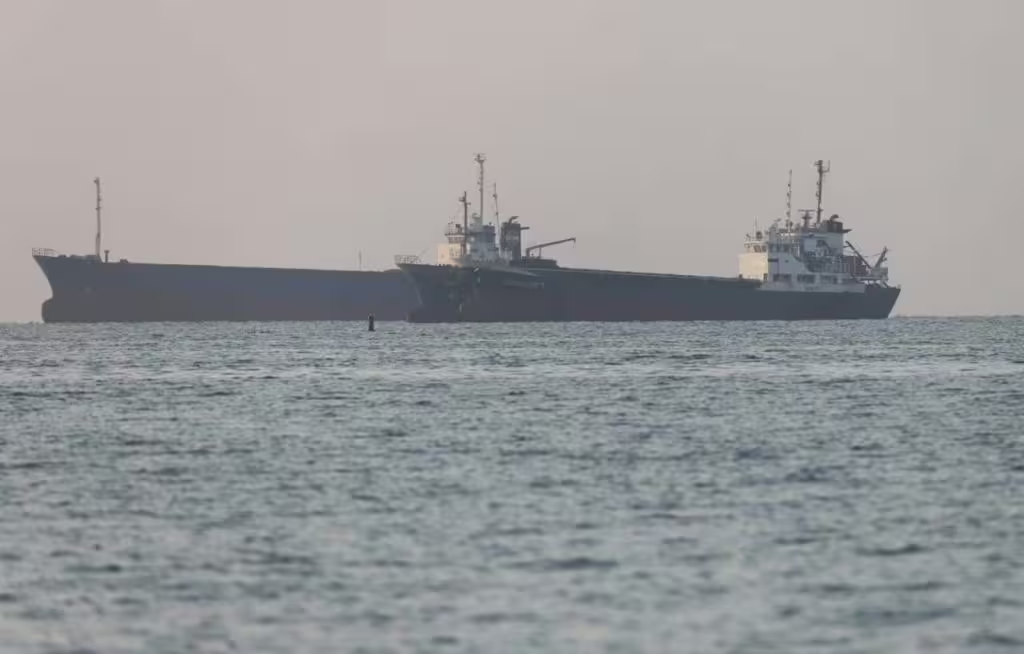
Tanker companies and shipping operators are preparing for a possible rebound in traffic through the Strait of Hormuz as diplomatic signals point to a potential U.S.-Iran deal to reopen the vital waterway.
Lars Barstad, the CEO of Frontline, told CNBC that transits through Hormuz could jump sharply if a credible agreement is reached. But he cautioned that previous breakthroughs have appeared close before, only to fall apart.
Barstad said the strait is currently seeing only 5 to 10 vessel crossings a day, compared with 130 to 140 before the war.
Details
• Iran’s Islamic Revolutionary Guard Corps effectively blocked the Strait of Hormuz after U.S. and Israeli strikes on Iran began on Feb. 28, turning one of the world’s most important energy corridors into a high-risk chokepoint.
• Roughly a quarter of global oil flows through the strait, making any prolonged disruption a direct threat to energy and shipping markets.
• Since the closure, hundreds of vessels have remained trapped inside the Gulf, while more tankers have sailed “dark” by switching off tracking systems to reduce the risk of detection or attack.
• President Donald Trump said the U.S. Navy secretly helped 200 commercial vessels and more than 100 million barrels of oil move through the strait over the past month.
• Estimates of current flows vary widely. U.S. Energy Secretary Chris Wright put them at about 7 million barrels a day, while JPMorgan estimated slightly more than 5 million barrels a day.
• A U.S.-Iran memorandum of understanding has been under negotiation for weeks, with Qatar mediating between the two sides.
• The proposed framework would extend the ceasefire for 60 days. Under it, Iran would remove mines from the strait and allow shipping to return to prewar levels in exchange for an easing of the U.S. blockade on Iranian ports.
• Iranian officials have repeatedly said Tehran has not agreed to every provision. Disputes over uranium enrichment also remain unresolved.
• Shipping analysts warn that a formal reopening could trigger a sudden rush of vessels through the strait.
• That could release large volumes of oil trapped inside the Gulf into global markets in a short period.
• Recent estimates showed that roughly two-thirds of outbound tankers used shadow-fleet tactics to pass through the strait in May, up from 37% in the first month of the war.
• A return to normal shipping could weigh on oil prices if the accumulated barrels reach buyers at the same time.
• Barstad said shipowners are positioning for the moment the risk level drops. “The minute the tide turns,” he said, transits would resume in force.
What to watch
The first test is whether a U.S.-Iran deal looks credible and enforceable. If it does, shipping companies could move quickly to restore routes through Hormuz. But if the terms remain vague, or if the nuclear dispute keeps blocking progress, traffic may stay limited, with tankers continuing to rely on dark transits and alternative routes.
Source: CNBC