The latest
The recent attacks on Kuwait and Bahrain have reignited debate over Gulf security priorities, prompting renewed scrutiny of whether regional states can continue to address security threats individually.
A Gulf official whose country was recently targeted in attacks that struck sensitive civilian facilities said the developments had gone beyond the framework of solidarity and mutual support.
“The events have imposed new security realities and require a reassessment of existing alliances,” the official told +ontime.
The official also criticized what he described as weak Gulf messaging toward Iran.
“We are dealing with an adversary that sees peace initiatives and mediation as signs of weakness,” he said. “It operates with the mindset of a state-militia hybrid.”
Details
• UAE diplomatic adviser Anwar Gargash called for a unified and cohesive Gulf response, arguing that regional security is fully interconnected and that no Gulf state should be left to face such attacks alone.
• Gargash’s assessment reflects the “hawks and doves” framework he previously outlined at the Gulf Media Forum, where he warned that mediators risk becoming “victims” in a volatile regional environment that does not respect neutrality.
• His remarks have revived questions about the political value of continued mediation efforts led by countries such as Saudi Arabia and Qatar while Gulf states themselves face what officials describe as direct threats to their sovereignty.
• At the same time, a Wall Street Journal report said the administration of U.S. President Donald Trump warned Oman of potential sanctions or even military action unless it scaled back mediation activities and facilitation efforts that Washington believes benefit Tehran.
What to watch
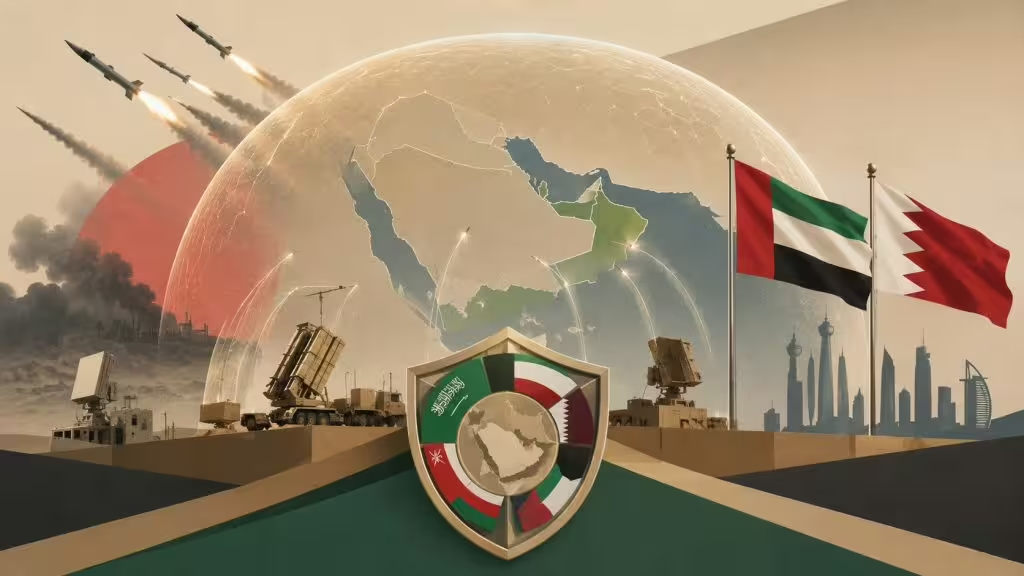
Attention is now turning to whether Gulf capitals will maintain back-channel diplomacy with Iran or move toward a more tangible activation of the GCC Joint Defense Agreement. Another key question is whether the current crisis could accelerate the formation of new intra-Gulf security arrangements and reshape the role of U.S. military bases across the region.