The latest
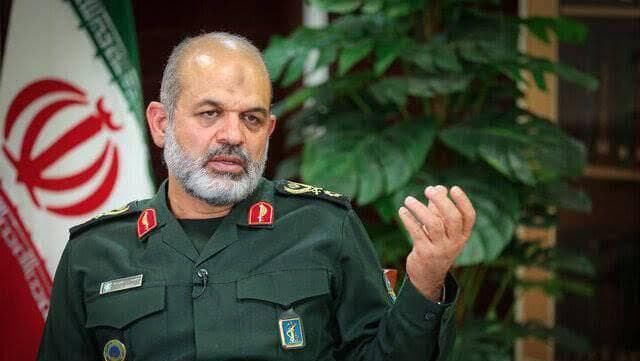
Ahmad Vahidi, commander of Iran’s Islamic Revolutionary Guard Corps (IRGC), was a driving force behind Tehran’s decision to launch missiles at Israel, according to a report by The Wall Street Journal.
The report said Vahidi pushed for a military response despite objections from Iranian officials who feared escalation could derail ongoing talks with the United States.
According to the newspaper, Vahidi persuaded Iran’s Supreme National Security Council to approve the strike, further cementing his position as one of the most influential figures in the Iranian system.
The report also suggests that Vahidi’s rise has come at the expense of officials who favor a diplomatic breakthrough with Washington, including President Masoud Pezeshkian and Foreign Minister Abbas Araghchi.
Details
• Vahidi led calls for a military response following attacks targeting Hezbollah.
• He opposes major concessions before Iran secures its demands and restores its deterrence capabilities.
• The report describes the IRGC as the main obstacle to a potential agreement with Washington.
• Vahidi previously served as defense minister, interior minister, and the first commander of the Quds Force.
• He remains the subject of an Interpol notice issued in 2007 over allegations linked to the 1994 bombing of the AMIA Jewish community center in Buenos Aires. Iran denies the accusations.
• The United States has sanctioned Vahidi over his alleged role in Iran’s missile and nuclear programs.
What to watch
The key question is whether Vahidi’s growing influence will complicate efforts to reach a U.S.-Iran deal. If the IRGC continues to dominate decision-making, Tehran may become less willing to compromise, potentially slowing negotiations despite signs that a preliminary agreement is within reach.